UM Forum on Differential Equations
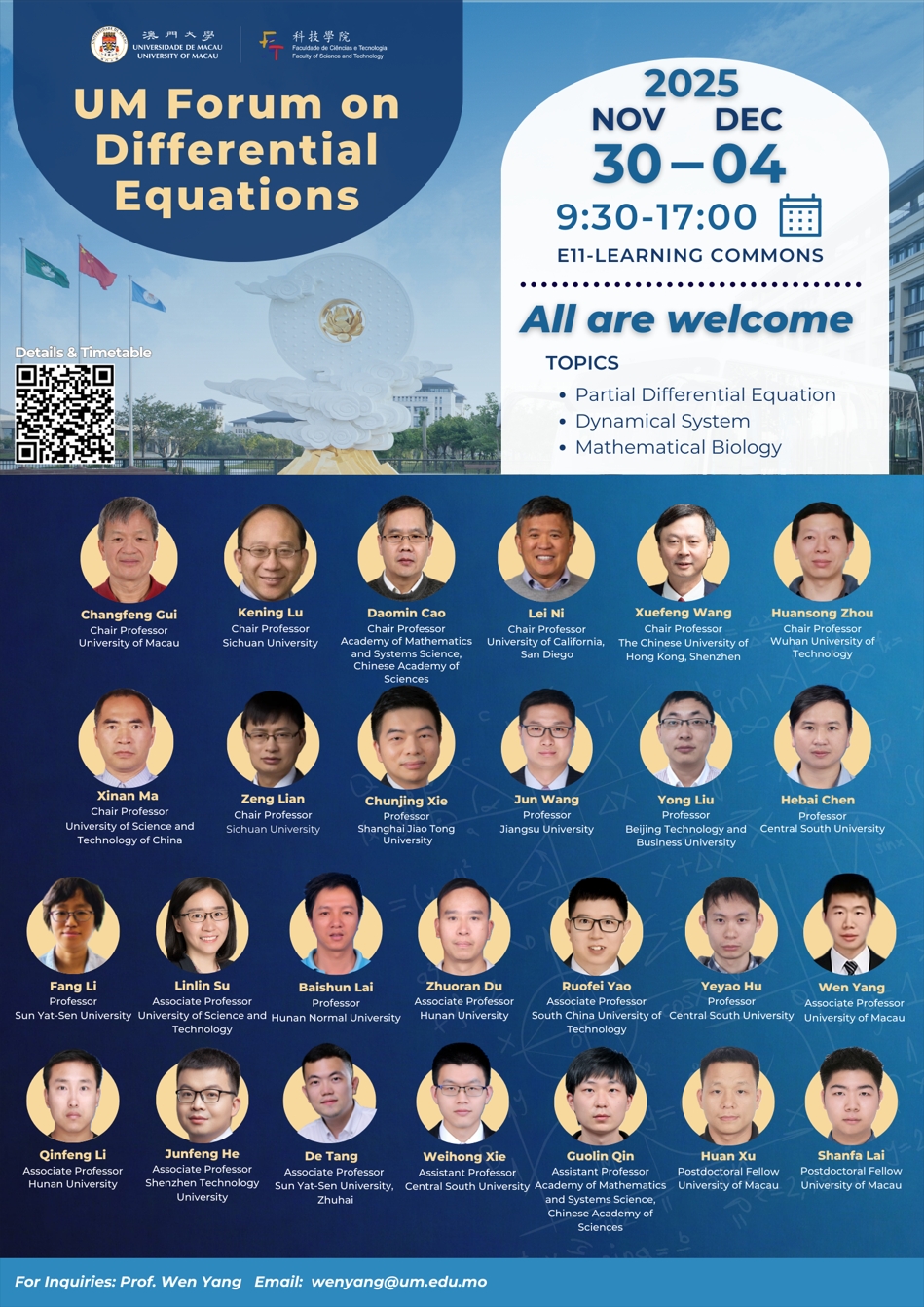
Nov 30- Dec 4, 2025
Home Page

Introduction
The conference is designed to serve as a suitable platform for advancing the theory, methods, and applications of differential equations across diverse scientific and engineering fields. By convening leading researchers, early-career scholars, and interdisciplinary practitioners, the conference scheme aims to foster vibrant knowledge exchange through in-depth discussions on ordinary, partial, stochastic, and dynamical systems, encompassing cutting-edge numerical simulations and analytical techniques. It promotes innovation and collaboration by encouraging cross-disciplinary dialogues that tackle real-world challenges in physics, biology, and other applied sciences, thereby igniting novel research synergies and joint projects.
Date
Nov 30 – Dec 4, 2025
Venue
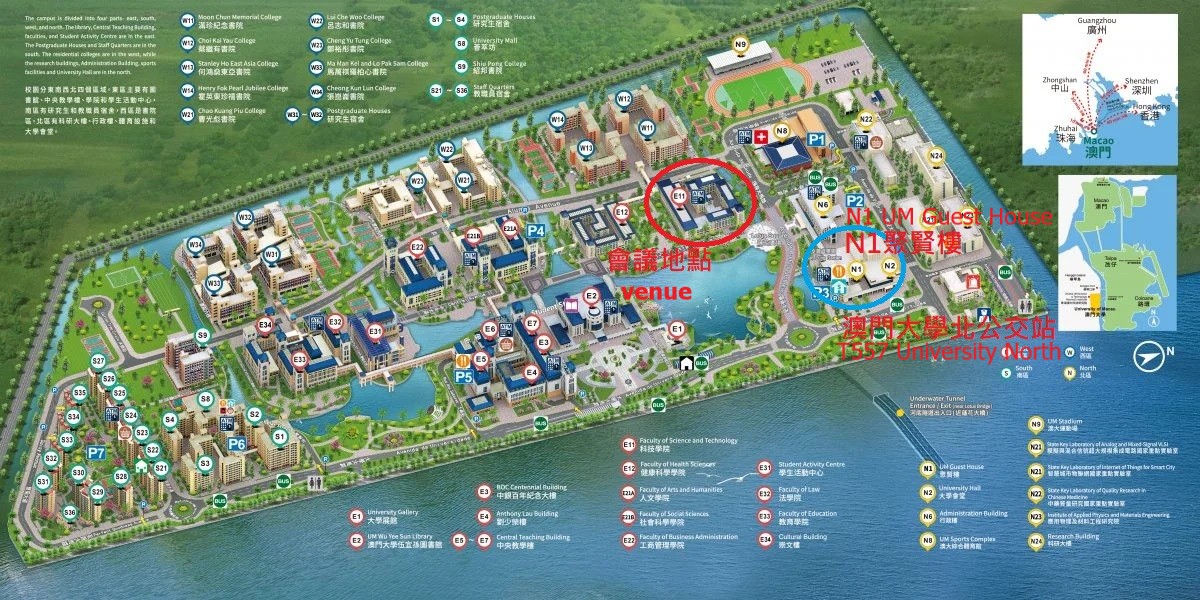
E11-Learning Commons
Faculty of Science and Technology
University of Macau, E11
Avenida da Universidade,
Taipa, Macau, China
Transportation
Summary of bus routes to Faculty of Science and Technology E11
| Starting Point | Starting Bus Stop | Bus | Transfer Alighting Stop | Transfer Boarding Stop | Bus | Final Stop |
|---|---|---|---|---|---|---|
| Gongbei Port | M9 – Praça das Portas do Cerco (walk ≈ 200 m) | 3A | M219/2 – Av. 1º de Maio | M219/1 – Av. 1º de Maio | 73 | T555/2 – UM / Sports Complex (walk ≈ 100 m to E11 – Faculty of Science and Technology) |
| Qingmao Port | M60 – Qingmao / Avenida do Comendador Ho Yin (walk ≈ 200 m) | 51A | M219/1 – Av. 1º de Maio | (same stop) M219/1 – Av. 1º de Maio | 73 | T555/2 – UM / Sports Complex (walk ≈ 100 m to E11 – Faculty of Science and Technology) |
| Taipa Ferry Terminal | T345/1 – Taipa Ferry Terminal (Lane B) (walk ≈ 200 m) | 26 | T368 – Av. Olímpica | (same stop) T368 – Av. Olímpica | 72 | T555/2 – UM / Sports Complex (walk ≈ 100 m to E11 – Faculty of Science and Technology) |
| Hengqin Port | T560/2 – Macao – Hengqin Frontier Post (walk ≈ 200 m) | 102X | T425 – Rotunda Marginal / Est. do Dique Oeste | (opposite side) T424 – Rotunda Marginal / Ecological Zone | 71 / 72 / 73 | T555/2 – UM / Sports Complex (walk ≈ 100 m to E11 – Faculty of Science and Technology) |
| T560/7 – Macao – Hengqin Frontier Post (F2 lane) (walk ≈ 200 m) | 701X | T550/3 – University of Macao / Terminus (Lane B) | T550/4 – University of Macao / Terminus (Lane B) | 73 | T556 – UM / Administration Building (walk ≈ 100 m to E11 – Faculty of Science and Technology) | |
| Macao Airport | T356/1 – Macao Airport (walk ≈ 200 m) | 51A | T394 – Av. Cidade Nova / Venetian | (same stop) T394 – Av. Cidade Nova / Venetian | 72 | T555/2 – UM / Sports Complex (walk ≈ 100 m to E11 – Faculty of Science and Technology) |
|
Notes: 1. After entering Macau, you can use the WeChat mini-program "Bus Traveling System" or from Apple App Store to get the latest bus information. 2. Walking routes can be found using various map apps. |
||||||
至E11科技學院公交路線匯總
| 起始點 | 起始站點 | 乘坐巴士 | 中轉下車站 | 中轉起始站 | 乘坐巴士 | 終點站 |
|---|---|---|---|---|---|---|
| 拱北口岸 | M9-關閘廣場(需步行約200米至該站點) | 3A | M219/2-勞動節大馬路 | M219/1-勞動節大馬路 | 73 | T555/2澳大/綜合體育館(步行約100米至E11科技學院) |
| 青茂口岸 | M60-青茂/何賢紳士馬路(需步行約200米至該站點) | 51A | M219/1-勞動節大馬路 | (同站換乘)M219/1-勞動節大馬路 | 73 | T555/2澳大/綜合體育館(步行約100米至E11科技學院) |
| 氹仔客運碼頭 | T345/1-氹仔客運碼頭(B車道)(需步行約200米至該站點) | 26 | T368-奧林匹克大馬路 | (同站換乘)T368-奧林匹克大馬路 | 72 | T555/2澳大/綜合體育館(步行約100米至E11科技學院) |
| 橫琴口岸 | T560/2-橫琴澳方口岸(需步行約200米至該站點) | 102x | T425-海濱圓形地/西堤馬路 | (對面)T424-海濱圓形地/生態保護區 | 71/72/73 | T555/2澳大/綜合體育館(步行約100米至E11科技學院) |
| 或T560/7-橫琴澳方口岸(F2車道)(需步行約200米至該站點) | 701x | T550/3-澳門大學總站(B車道) | T550/4-澳門大學總站(B車道) | 73 | T556 澳大/行政樓(步行約100米至E11科技學院) | |
| 澳門機場 | T356/1澳門機場(需步行約200米至該站點) | 51A | T394-新城大馬路/威尼斯人 | (同站換乘) T394-新城大馬路/威尼斯人 | 72 | T555/2澳大/綜合體育館(步行約100米至E11科技學院) |
|
備註: 1. 入澳門後,可使用微信小程序「巴士報站」或Apple App Store獲取巴士最新資訊 2. 步行路線可通過各地圖軟件進行導航 |
||||||
Hotel Recommendation
- 皇庭海景酒店 (Pousada Marina Infante)
 蓮花海濱大馬路, 氹仔, 澳門
4HX2+W63, Avenida Marginal Flor de Lotus, Taipa, Macau
https://www.pousadamarinainfante.com/tw/index.html
- 英倫遊艇會酒店(England Marina Club Hotel)
蓮花海濱大馬路, 氹仔, 澳門
Avenida Marginal Flor de Lotus, Taipa, Macau
https://www.englandmarinaclubhotel.com/
- 瑞吉酒店 (The St. Regis Macao)
澳門倫敦人,金光大道連貫公路, 路氹, 澳門
The Londoner Macao, Estrada do Istmo, s/n, Cotai, Macau
https://www.londonermacao.com/hotels/st-regis-macao.html
- 威尼斯人酒店 (The Venetian Macao)
澳門威尼斯人, 氹仔望德聖母灣大馬路, 路氹, 澳門
Estrada da Baia de N. Senhora da Esperanca, Cotai, Macau
https://www.venetianmacao.com/
- 巴黎人酒店 (The Parisian Macao)
澳門巴黎人, 金光大道連貫公路, 路氹, 澳門
Lote 3, Estrada do Istmo, Cotai Venetian Macau, Cotai, Macau
https://www.parisianmacao.com/
- 康萊德酒店 (Conrad Macao)
澳門康萊德, 路氹連貫公路, 路氹, 澳門
Estrada do Istmo. s/n Cotai, Cotai, Macau
https://www.themacauroosevelt.com/
- JW萬豪酒店 (JW Marriott Hotel Macau)
澳門銀河綜合度假城,望德聖母灣大馬路, 路氹, 澳門
Galaxy Macau, Estrada da Baía da Nossa Senhora da Esperança, s/n, Cotai, Macau
https://www.galaxymacau.com/hotels/jw-marriott/
- 羅斯福酒店 (The Macau Roosevelt)
澳門羅斯福, 氹仔東亞運大馬路924-998號, 氹仔, 澳門
Nos. 924 e 998 da Avenida dos Jogos da Ásia Oriental- Aos acessos do imóvel, Taipa, Macau
https://www.themacauroosevelt.com/
*以上酒店距離澳門大學約15-20 分鐘車程。The above hotels are about 15–20 minutes drive from the University of Macau.
 |
Kening Lu Chair Professor, Sichuan University |
 |
Daomin Cao Chair Professor, Academy of Mathematics and Systems Science, Chinese Academy of Sciences |
 |
Lei Ni Chair Professor, University of California, San Diego |
 |
Xuefeng Wang Chair Professor, The Chinese university of Hong Kong, Shenzhen |
 |
Huansong Zhou Chair Professor, Wuhan University of Technology |
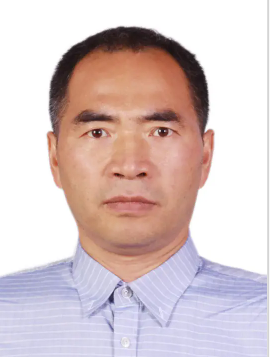 |
Xinan Ma Chair Professor, University of Science and Technology of China |
 |
Zeng Lian Chair Professor, Sichuan University |
 |
Chunjing Xie Professor, Shanghai Jiao Tong University |
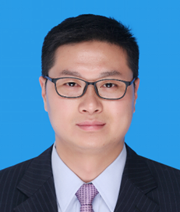 |
Jun Wang Professor, Jiangsu University |
 |
Yong Liu Professor, Beijing Technology and Business University |
 |
Hebai Chen Professor, Central South University |
 |
Fang Li Professor, Sun Yat-Sen University |
 |
Linlin Su Associate Professor, University of Science and Technology |
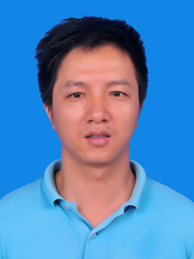 |
Baishun Lai Professor, Hunan normal university |
 |
Zhuoran Du Associate Professor, Hunan University |
 |
Ruofei Yao Associate Professor, South China University of Technology |
 |
Yeyao Hu Professor, Central South University |
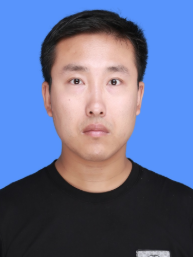 |
Qinfeng Li Associate Professor, Hunan University |
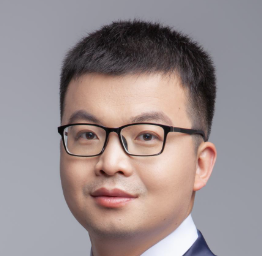 |
Junfeng He Associate Professor, Shenzhen Technology University |
 |
De Tang Associate Professor, Sun Yat-Sen University, Zhuhai |
 |
Weihong Xie Assistant Professor, Central South University |
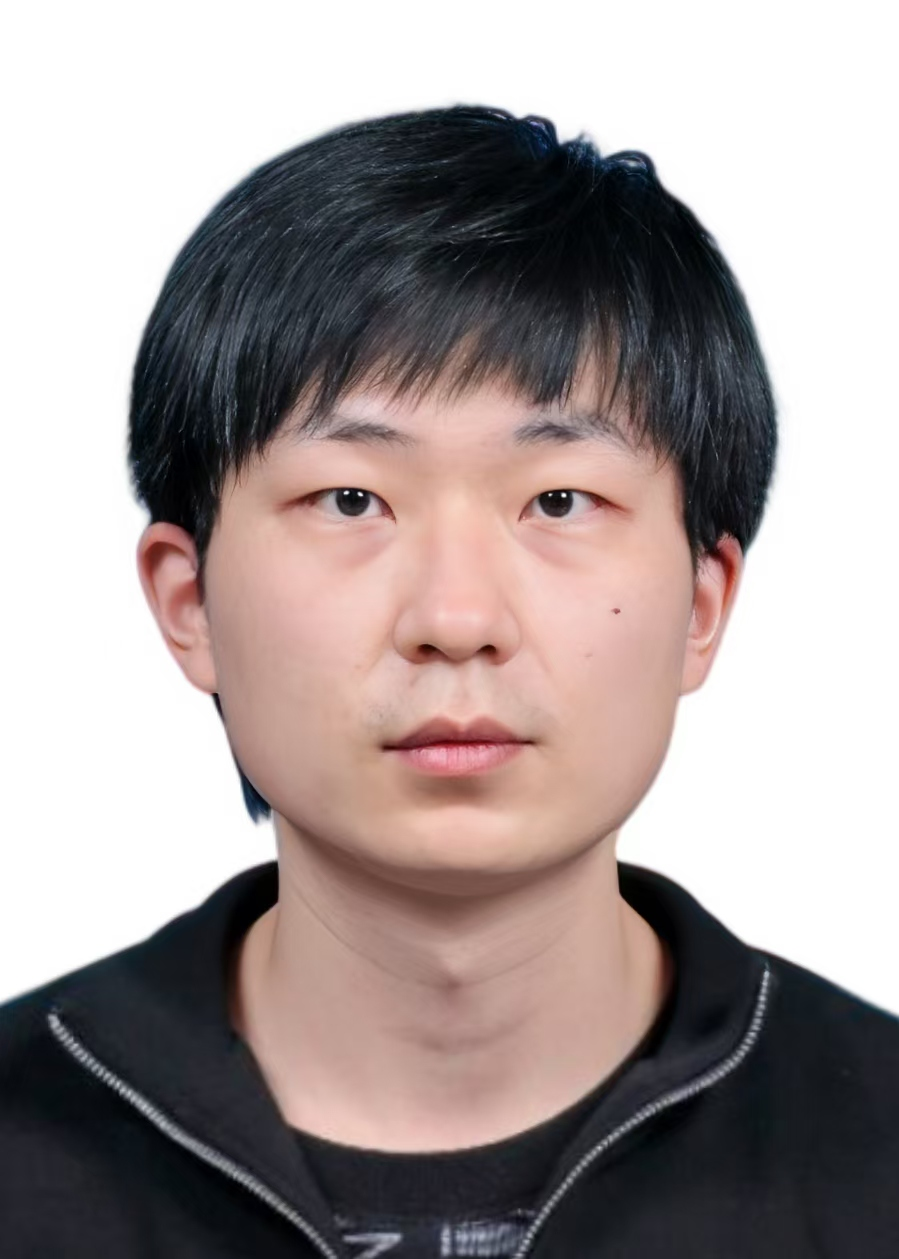 |
Guolin Qin Assistant Professor, Academy of Mathematics and Systems Science, Chinese Academy of Sciences |
 |
Huan Xu Postdoctoral Fellow, University of Macau |
 |
Shanfa Lai Postdoctoral Fellow, University of Macau |
| 2 December, 2025 | ||||
| No. | Time | Speaker | Title | Host |
| 10 | 9:30-10:00 |
Daomin Cao, Academy of Mathematics and Systems Science, Chinese Academy of Sciences |
Helical Kelvin waves for 3D incompressible Euler equations | Huansong Zhou |
| 11 | 10:00-10:30 |
Yong Liu, Beijing Technology and Business University |
Stable solutions of U(1) Yang-Mills-Higgs model in R^4 | |
| 10:30-11:00 | Break | |||
| 12 | 11:00-11:30 |
Xinan Ma, University of Science and Technology of China |
The Liouville-type equation and an Onofri-type inequality on closed 4-manifolds | Zeng Lian |
| 13 | 11:30-12:00 |
Linlin Su, University of Science and Technology |
Some Interface Eigenvalue Problems | |
| 12:00-14:30 | Lunch | |||
| 14 | 14:30-15:00 |
Baishun Lai, Hunan Normal University |
Localization analysis of incompressible 3D Navier-Stokes equation and its application | Xinan Ma |
| 15 | 15:00-15:30 |
Huan Xu, University of Macau |
Classification of steady solutions to the 2D incompressible Euler system | |
| 15:30-16:00 | Break | |||
| 16 | 16:00-16:30 |
Hebai Chen, Central South University |
Maximum number of limit cycles of the piecewise linear Lienard system | Wen Yang |
| 17 | 16:30-17:00 |
Zhuoran Du, Hunan University |
Multiple-end solutions to a free boundary problem with non-smooth double well potential | |
| 18 | 17:00-17:30 |
Junfeng He, Shenzhen Technology University |
Spreading Dynamics in a Farmer and Hunter-gatherer Interaction Model with Exponentially Decaying Initial Data | Ruofei Yao |
1. Speaker: Lei Ni [9:30–10:00]
Title: Some spectrum estimates and their applications
Abstract:
In this talk, I shall discuss results of mine, improving results of Simons on Yang-Mills fields and minimal submanifolds.
2. Speaker: Chunjing Xie [10:00–10:30]
Title: Analysis on the scale invariant solutions of the steady Navier-Stokes system
Abstract:
One of the most important features of the Navier-Stokes system is that it has a natural scaling. This makes the study for the scaling invariant solutions of the Navier-Stokes system not only mathematically significant but also physically important. The typical scale invariant solutions include self-similar solutions, discrete self-similar solutions, etc. In this talk, we first discuss the rigidity of the scale invariant solutions of steady Navier-Stokes system in higher dimensional cases. This rigidity needs neither smallness nor self-similarity of the solutions, and thus has interesting applications in the analysis of regularity and far field behavior of the solutions. Next, we give a complete classification of the self-similar solutions in a two-dimensional sector with physical boundary. This classification also helps characterizes the detailed far field behavior of flows in an aperture domain. Finally, we prove the existence of self-similar solutions of steady Navier-Stokes system with the general (-3)-homogeneous external force for the dimension 4<n<17.
3. Speaker: Xuefeng Wang [11:00–11:30]
Title: Existence and nonexistence of stable patterns in semilinear nonlocal diffusion equations
Abstract:
According to the classical results of Casten, Holland, and Matano regarding semilinear local diffusion equations on bounded domains with no-flux boundary condition, we know that stable patterns do not exist in convex domains, while they do emerge in dumbbell-shaped geometries, particularly when the kinetic term is bistable. Thus diffusion demolishes spikes, stipes and the likes. We ask what happens in the case of non-local diffusion.
We recover the classical results for the nonlocal diffusion analogs, demonstrating the absence of stable smooth patterns in both one-dimensional intervals and multi-dimensional balls. In addition, we construct discontinuous, asymptotically stable patterns when the kinetic term is bistable. Our results reveal a significant principle: large nonlocal diffusion tends to destabilize patterns, whereas weak nonlocal diffusion stabilizes them, especially in cases with bistable kinetic terms. Importantly, the geometry of the domain appears to play a less critical role in this process of stabilization.
This is a joint work with Professors Fang Li and Xueli Bai.
4. Speaker: Qinfeng Li [11:30–12:00]
Title: On the Robin torsion problem
Abstract:
In this talk, I’ll begin by reviewing some well-established results concerning the classical Dirichlet torsion problem. Subsequently, I’ll delve into the torsion problem under Robin boundary conditions. Surprisingly, many distinct geometric properties emerge when compared to the Dirichlet case. Throughout the talk, I’ll also present some open questions. The talk is based on joint work with Juncheng Wei, Hang Yang, and Ruofei Yao.
5. Speaker: Huansong Zhou [14:30–15:00]
Title: Ground state and its asymptotical behavior for two-component BEC system
Abstract:
In this talk, I will talk about some of my joint results on the existence of ground states for two coupled Schrodinger equations arising in the study of Bose–Einstein condensates. Moreover, some asymptotical properties on the ground states are also discussed.
6. Speaker: Jun Wang [15:00–15:30]
Title: Traveling waves and nontrivial steady compactly supported Euler flows with vorticity
Abstract:
In this talk, we first establish the existence of Stokes waves with piecewise smooth vorticity in a two-dimensional, infinitely deep fluid domain. These waves represent traveling water waves propagating over sheared currents in a semi-infinite cylinder, where the vorticity may exhibit discontinuities. On the other hand, we construct local curves of solutions to the steady, incompressible Euler equations with a free boundary and constant vorticity. The key distinction between our work and existing studies on this topic lies in our analysis near circular flows, as opposed to others near laminar flows. Our methodology is rooted in local bifurcation theory and the use of shape derivatives.
7. Speaker: Fang Li [16:00–16:30]
Title: Stability Analysis of an SIS Epidemic Model in Heterogeneous Environment
Abstract:
In this talk, we study an SIS reaction-diffusion model in spatially heterogeneous environment proposed in L.J.S. Allen, B.M. Bolker, Y. Lou and A.L. Nevai, DCDS, 2008, where the existence and uniqueness of the endemic equilibrium are established and its stability is proposed as an open problem. However, till now, there is no progress in the stability analysis except for special cases with either equal diffusion coefficients or constant endemic equilibrium. In this talk, we demonstrate the first criterion in determining the stability of the non-constant endemic equilibrium with different diffusion coefficients. Thanks to this criterion, when one of the diffusion rates is small or large, the impact of spatial heterogeneity on the stability can be characterized based on the asymptotic behavior of the endemic equilibrium.
8. Speaker: De Tang [16:30–17:00]
Title: Existence of positive steady-state solutions to the SKT competition system with cross-diffusion
Abstract:
We consider a stationary Shigesada-Kawasaki-Teramoto competition system with cross-diffusion. The existence and stability/instability of non-constant positive solutions of the system has been widely studied in the literature but confined to some special parameter range. In this talk, we establish the existence/nonexistence of non-constant positive solutions for some other parameter range, which fills some gaps left out in the existing results. In particular, we find some conditions under which multiple positive solutions exist.
9. Speaker: Shanfa Lai [17:00–17:30]
Title: Existence and Stability of Solitary Capillary-Gravity Water-Wave in Three Dimensions
Abstract:
This talk summarizes our work on travelling waves in the 3D gravity-capillary water wave problem. We first establish the existence of a fully localized solitary wave, analogous to a lump solution of the KP-I equation, in a specific parameter regime. Subsequently, we demonstrate the conditional orbital stability of these waves under strong surface tension. By adapting the GSS framework within Mielke’s approach and employing spectral analysis, we prove their nonlinear stability despite their non-minimizing character. This presentation thus provides a complete story, from the construction of these unique 3D waves to a proof of their dynamic persistence.
10. Speaker: Daomin Cao [9:30–10:00]
Title: Helical Kelvin waves for 3D incompressible Euler equations
Abstract:
m-fold rotation symmetry vortex patches are very important special solutions for incompressible Euler equations. For the 2D case, a lot of results on the existence of such kind of solutions have been obtained. The characteristic function of a disc centered at the origin is the vorticity function of trivial solution (Since every radially symmetric function can serve as vorticity function). Another famous example is the characteristic function of an ellipse, which is called the Kirchhoff vortex solution. As for 3D case, there are some results on the existence of solutions with highly concentrated vorticity near a helical filament have been obtained in recent years. However existence of helical symmetric solution with large cross-section are few. The speaker will introduce results on the existence of helical Kelvin waves( solutions whose vorticity is a characteristic function of a helical tube with m-fold rotational symmetry cross-section) obtained recently with his collaborators Boquan Fan, Rui Li and Guolin Qin. The method used is the Crandall-Rabinowitz bifurcation theorem.
11. Speaker: Yong Liu [10:00–10:30]
Title: Stable solutions of U(1) Yang-Mills-Higgs model in R^4
Abstract:
In this talk, we give a positive answer to the conjecture of Liu-Ma-Wei-Wu in \cite{LMWW} that the family of entire solutions to the -Yang-Mills-Higgs equation constructed by the gluing method in that paper are stable. This is the first family of examples of nontrivial stable critical points to the -Yang-Mills-Higgs model in higher dimensional Euclidean space. Intuitively, the stability of these solutions corresponds to the fact that holomorphic curves are area-minimizing. We also show that these entire solutions are non-degenerate. Our proof is based on detailed analysis of the linearized operators around this family and the spectrum estimates of the Jacobi operator by Arezzo-Pacard.
12. Speaker: Xinan Ma [11:00–11:30]
Title: The Liouville-type equation and an Onofri-type inequality on closed 4-manifolds
Abstract:
We study the Liouville-type equation  on a closed Riemannian manifold
  with
with  and
and  . Using the method of invariant tensors, we derive a differential identity to classify solutions within certain ranges of the parameters
  . A key step in our proof is a second-order derivative estimate, which is established via the continuity method. As an application of the classification results, we derive an Onofri-type inequality on the 4-sphere and prove its rigidity.This is the joint work with Wu tian and Zhou xiao.
13. Speaker: Linlin Su [11:30–12:00]
Title: Some Interface Eigenvalue Problems
Abstract:
We study elliptic eigenvalue problems in a bounded domain of Rn subject to four types of transmission conditions on an interior interface. Such an interface may model a contact surface between different media, a physical barrier, or a permeable biological membrane. We characterize the eigenvalues and analyze how they depend on the relevant parameters. This work is joint with Yantao Wang and Zhannan Zhuang.
14. Speaker: Baishun Lai [14:30–15:00]
Title: Localization analysis of incompressible 3D Navier-Stokes equation and its application
Abstract:
In this talk, I will introduce the localized argument in frequency space given by Terence Tao, and the local-in-space smoothing technique near the initial time established by Jia-Sverak. At the same time, I will present some applications of these techniques, such as quantitative regularity for the Navier-Stokes equations via Carleman inequalities, construction of large self-similar solution of Navier-Stokes by Leary Shaulder fixed point Theorem.
15. Speaker: Huan Xu [15:00–15:30]
Title: Classification of steady solutions to the 2D incompressible Euler system
Abstract:
Beginning with Liouville’s theorem and Little Picard’s theorem for holomorphic functions, I will present recent work on the classification of steady solutions to the 2D incompressible Euler system. I will then proceed to completely classify the vanishing viscosity limits for the 2D steady Navier-Stokes system.
16. Speaker: Hebai Chen [16:00–16:30]
Title: Maximum number of limit cycles of the piecewise linear Lienard system
Abstract:
For the piecewise linear Lienard system x = F(x) − y, y = x, where F(x) is a continuous piecewise linear function with n fold points, the question of how many limit cycles that such a system can have has been a classical and open problem in differential equations and dynamical systems. Nowadays, we only know the answer for the case n = 1. For the cases n ≥ 2, the problem still remains open. This talk aims to give an affirmative answer for the case n = 2 of this open problem, i.e., the maximum number of limit cycles of the continuous piecewise linear function with 2 fold points is 2. To this end, we start with the global bifurcation diagram in the parameter space and fully discuss the global phase portraits and structural stability in the Poincare disc of this continuous piecewise linear Lienard system in the case n = 2. This system exhibits abundantly interesting and rich dynamics, including the generalized Hopf bifurcation, boundary equilibrium bifurcation, grazing limit cycle bifurcation, and double limit cycle bifurcation, which may have potential interdisciplinary applications.
17. Speaker: Zhuoran Du [16:30–17:00]
Title: Multiple-end solutions to a free boundary problem with non-smooth double well potential
Abstract:
In this talk we give the existence of multiple-end solutions to the following semi-linear equation  where the non-smooth double well potential
  and
and  . Precisely, we obtain the existence according to three different ranges of
  . Modica inequality and monotonicity formula are also established. This talk is based on the work with Changfeng Gui and Wen Yang.
18. Speaker: Junfeng He [17:00–17:30]
Title: Spreading Dynamics in a Farmer and Hunter-gatherer Interaction Model with Exponentially Decaying Initial Data
Abstract:
We investigate the spreading dynamics of a classical two-component reaction-diffusion system originally proposed by Ammerman and Cavalli-Sforza to model the Neolithic transition from hunter-gatherer societies to agricultural communities in Europe. We show that the asymptotic spreading speed is entirely determined by the decay rate of these tails and derive sharp estimates for the wavefront position at large times. Our analysis adopts an approach that circumvents the direct use of the comparison principle, as our system does not possess this property due to its lack of monotonicity.
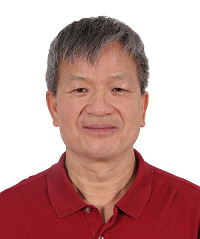 |
Changfeng GUI Chair Professor, UMDF Professorial Fellow of Mathematics, Head of Department of Mathematics, University of Macau |
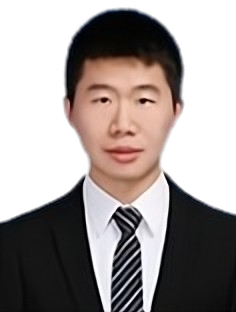 |
Wen YANG Associate Professor, Department of Mathematics, University of Macau |
Available after the workshop.
Please feel free to contact us.
Email: wenyang
Department of Mathematics
Email: fst.enquiry@um.edu.mo
Tel: (853) 8822-4963
Fax: (853) 8822-2426
Room E11-3076
Faculty of Science and Technology
University of Macau, E11
Avenida da Universidade,
Taipa, Macau, China